
AI search engine optimization tools
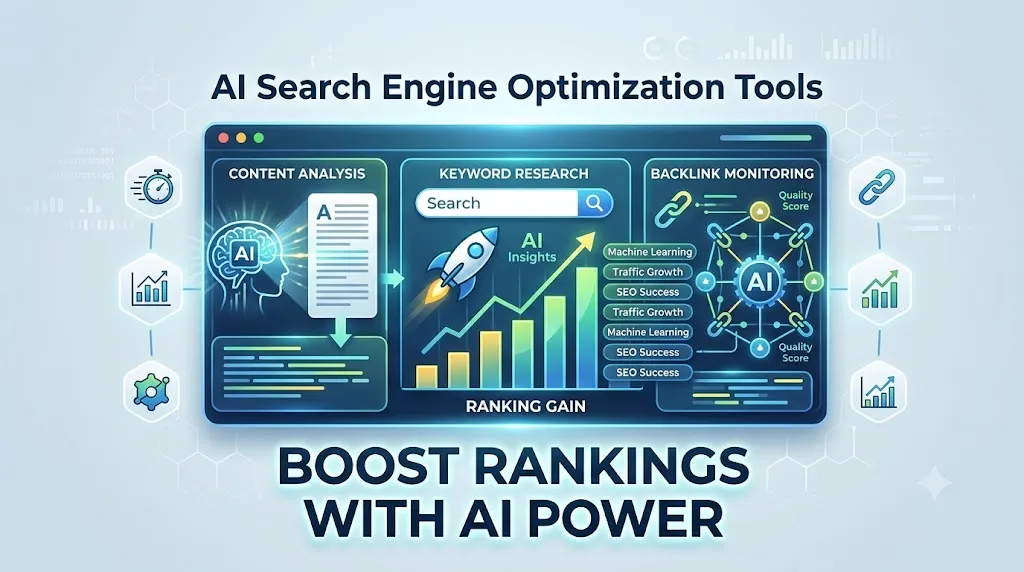
In today’s competitive digital world, AI SEO tools play a crucial role in improving website rankings. These tools help automate keyword research, content optimization, and technical SEO tasks efficiently.
A few years ago, AI-powered SEO tools seemed like the biggest breakthrough the digital marketing industry had ever seen. I still remember a conversation with one of my SaaS clients in late 2026. He called me early one morning, full of excitement after spending the weekend testing a brand-new AI writing platform.
“We don’t need freelance writers anymore,” he said confidently. “I generated over forty articles in a single weekend. Imagine how quickly we’ll dominate Google.”
Curious, I asked him to share the articles.
At first glance, they looked impressive. The grammar was flawless, the formatting was clean, and every sentence sounded professional. But after reading a few paragraphs, one thing became painfully obvious: they lacked originality. Every article felt like a polished summary of information that already existed online. Nothing was unique, insightful, or based on real experience.
I advised him not to publish the content without major editing.
Unfortunately, he ignored that advice.
For the first few weeks, everything appeared to be working. Impressions increased, pages started getting indexed, and the traffic graphs looked promising. Then Google’s next Core Update arrived. Within days, organic traffic dropped dramatically well below where it had been before the AI-generated content was published.
That experience completely changed how I think about AI SEO tools.
They aren’t magic solutions that automatically improve rankings. Instead, they’re productivity tools designed to help experienced marketers work faster and smarter. Like any professional tool, they can produce excellent results when used correctly, but they can also create serious problems when used carelessly.
Where AI SEO Tools Deliver Real Value
Many people still believe AI is mainly useful for writing articles. In reality, that’s only a small part of its potential.
The biggest advantage of AI lies in processing enormous amounts of SEO data within minutes, something that would normally take humans several hours.
For years, my keyword research process followed the same routine. I’d export thousands of keywords from tools like Ahrefs or Semrush, organize them into spreadsheets, compare search intent manually, and slowly group related topics together.
It was effective, but incredibly time-consuming.
Today’s AI-powered clustering tools complete that same task in just a few minutes.
Instead of simply comparing keywords word-for-word, these systems analyze the search results themselves. If two different keywords consistently trigger nearly identical Google results, the software recognizes that both searches represent the same user intent.
For example:
- Best CRM for plumbers
- Top CRM software for plumbing companies
Although the wording is different, Google often returns nearly the same pages for both queries.
Rather than creating two competing articles, AI recommends combining them into one comprehensive resource that satisfies both search intents.
This isn’t manipulating Google’s algorithm.
It’s simply using data intelligently to avoid creating duplicate content and wasting valuable publishing time.
AI Also Improves Content Depth
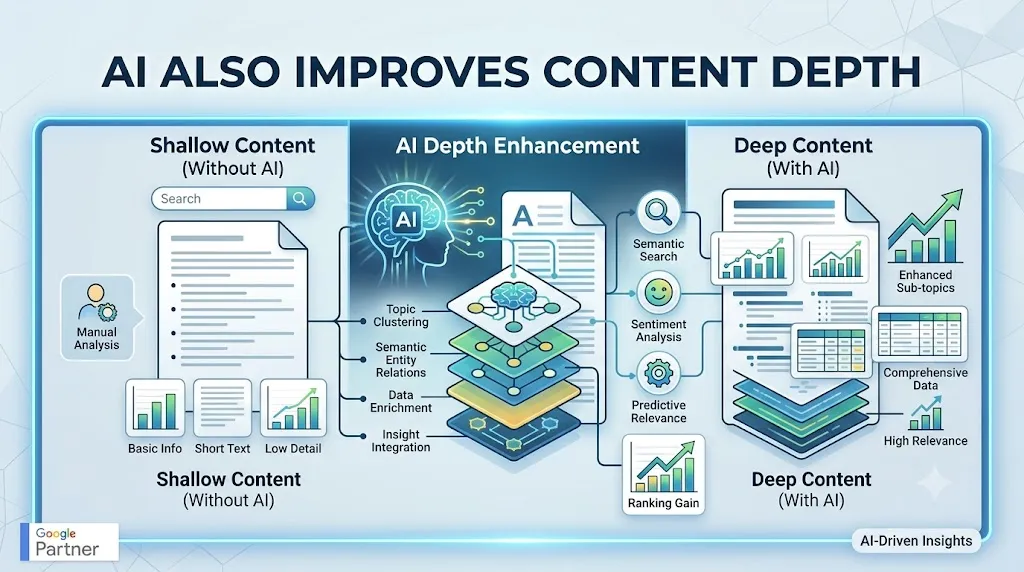
Another area where AI genuinely shines is content optimization.
Modern platforms like Surfer SEO, Clearscope, and Frase don’t simply count keywords anymore. Instead, they analyze hundreds of top-ranking pages to identify important concepts readers expect to find.
Imagine you’re writing a guide about appealing a property tax assessment.
Your article explains the process clearly, but you accidentally forget to discuss filing deadlines or millage rates.
A good optimization tool will quickly identify those missing concepts because they’re commonly covered by the highest-ranking pages.
Instead of rewriting your entire article, you simply add the missing sections, making your content more complete and genuinely more useful.
In this way, AI acts like an experienced editor reviewing your draft before publication.
Don’t Become Obsessed with SEO Scores
One of the biggest mistakes I see today is writers chasing optimization scores instead of creating valuable content.
Almost every SEO optimization platform includes some type of content score.
Usually, it starts in red, moves into yellow, and finally turns green once your article reaches a certain level.
The problem?
Many writers begin writing for the software instead of writing for real people.
I’ve seen excellent articles ruined because someone kept forcing additional keyword variations into perfectly natural paragraphs just to increase a score from 78 to 92.
The writing becomes repetitive.
Sentences become awkward.
The reader notices immediately.
Here’s something worth remembering:
Google doesn’t know or care whether Surfer SEO gave your article a score of 95.
Google evaluates the quality of the page itself.
If your article reads naturally, solves the user’s problem, demonstrates real expertise, and provides original value, it has a much better chance of performing well than an article that simply satisfies a third-party scoring system.
Personally, I aim for a healthy optimization score and then stop worrying about it.
Once the important topics are covered, I focus entirely on making the article enjoyable and genuinely helpful for readers.
That approach has consistently produced better long-term SEO results than endlessly chasing perfect numbers.
The Importance of Original Content in the AI Era
It’s impossible to discuss AI SEO tools today without mentioning Google’s ongoing focus on content quality. Over the past few years, Google has consistently refined its ranking systems to reward content that demonstrates genuine expertise, originality, and real value for users.
While Google has repeatedly stated that it does not penalize content simply because AI was used during the writing process, it does evaluate whether the final article is genuinely helpful. Websites that relied entirely on mass-produced, unedited AI content have struggled to maintain rankings because their pages often lacked original insights and meaningful value.
The biggest problem with publishing AI-generated content without human review is repetition.
Imagine one AI model summarizes the top-ranking pages on Google. Another AI then uses that summary as a source, and another repeats the process again. Eventually, the web becomes filled with nearly identical information presented in slightly different wording.
Search engines are becoming increasingly effective at identifying this pattern.
The websites that continue to perform well usually have something AI cannot easily replicate:
- Original experience
- Real-world testing
- Personal case studies
- Unique statistics
- Expert interviews
- First-hand opinions
- Custom screenshots or photographs
These elements provide genuine Information Gain, the kind of value that separates outstanding content from average content.
AI can organize information remarkably well, but it cannot replace real experience.
A Smarter Workflow for Modern SEO
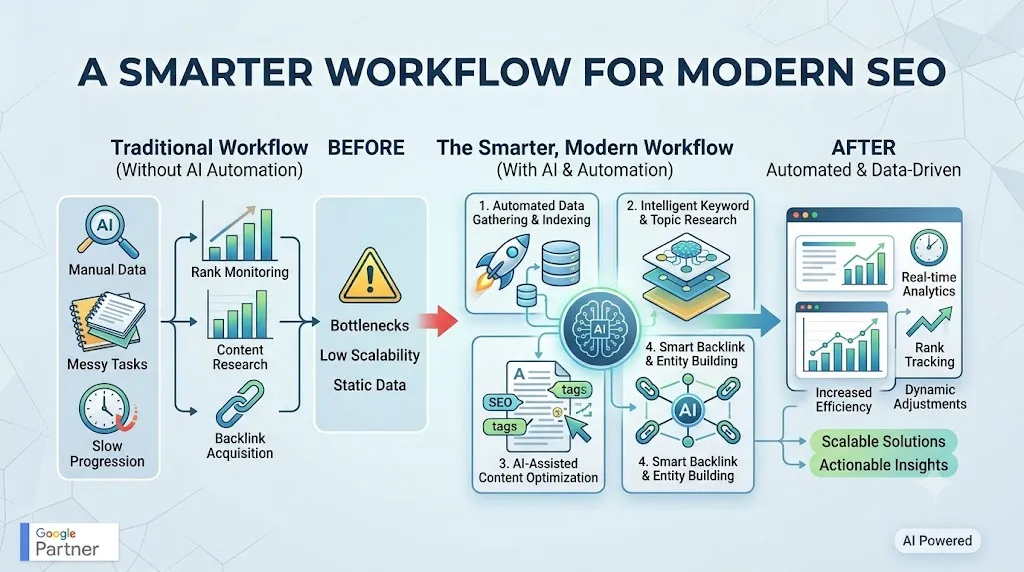
Over the last couple of years, I’ve developed a workflow that balances AI efficiency with human expertise. Instead of letting AI write everything, I assign different responsibilities to the software and the writer.
Step 1: Let AI Discover Opportunities
Start by using AI-powered keyword research and clustering tools to uncover topic gaps, related search queries, and content opportunities your competitors may have missed.
Step 2: Create the Unique Angle Yourself
This is where humans make the biggest difference.
Instead of publishing another generic article titled “Best Standing Desks,” ask yourself what unique experience you can add.
Examples include:
- Testing products for several months
- Comparing real performance
- Sharing personal experiences
- Including expert opinions
- Presenting original research
That unique perspective becomes your competitive advantage.
Step 3: Use AI to Build the Structure
AI is excellent at organizing information.
Generate an outline that includes all the important headings, frequently asked questions, semantic keywords, and related entities. This ensures your article covers the topic comprehensively before you even begin writing.
Step 4: Write Like a Human
Now comes the most valuable step.
Write naturally.
Explain concepts in simple language.
Add examples, experiences, practical tips, and observations that only a real person can provide.
This transforms an ordinary article into something readers actually enjoy.
Step 5: Optimize Before Publishing
Once the article is finished, run it through your preferred SEO optimization tool.
Check for:
- Missing semantic keywords
- Internal linking opportunities
- Meta title length
- Meta description quality
- Schema suggestions
- Readability improvements
Think of AI as your quality-control assistant not your replacement.
Final Thoughts
AI SEO tools are incredibly powerful when they’re used for research, organization, and optimization.
However, they should never replace human creativity.
The most successful websites combine both worlds.
They let AI handle repetitive analysis while allowing real writers to contribute expertise, storytelling, and original insights.
That balance is exactly what modern search engines are rewarding.
Frequently Asked Questions
Will Google penalize content simply because AI was used?
No.
Google doesn’t rank pages based on whether AI assisted during creation. Instead, it evaluates the overall quality of the finished content. If your article is original, useful, accurate, and demonstrates expertise, using AI as part of your workflow is perfectly acceptable.
What is the most valuable feature in an AI SEO tool?
One of the most useful capabilities is real-time SERP analysis.
The best platforms analyze current search results rather than relying on outdated databases. This allows you to understand current search intent, identify ranking patterns, and create content that matches what users are looking for today.
Can AI completely handle technical SEO audits?
Not entirely.
AI tools are excellent at identifying crawl issues, orphan pages, redirect problems, duplicate content, and other technical errors. However, complex issues involving JavaScript rendering, server configurations, or advanced indexing problems still require human expertise.
Will AI replace professional content writers?
Not likely.
AI has reduced the demand for low-quality, repetitive content, but experienced writers remain more valuable than ever.
Businesses still need experts who can provide original ideas, practical experience, unique opinions, and trustworthy information qualities that AI cannot genuinely create on its own.