AI-Powered SEO Software: Benefits, Tools, and Best Practices
Search engine optimization has never been a “set it and forget it” job. Rankings shift, competitors publish daily, Google updates its systems, and user behavior keeps changing. That is exactly why AI-powered SEO software has become so popular. It promises faster research, smarter recommendations, automated audits, and better content decisions.
But here is the honest truth: AI can make SEO work dramatically more efficient, but it does not replace judgment. The best results usually come from combining strong software with human strategy, editorial standards, technical knowledge, and real understanding of the audience.
Used well, AI-powered SEO software can uncover opportunities that would take hours to find manually. Used poorly, it can lead to generic content, over-optimization, and decisions based on misleading data. The difference is in how you use it.
What Is AI-Powered SEO Software?
AI-powered SEO software is a category of SEO platforms that use machine learning, natural language processing, automation, and data analysis to help improve website visibility in search engines.
Traditional SEO software might show keyword volume, backlinks, rankings, and technical issues. AI-driven SEO platforms go further by identifying search intent, clustering keywords, analyzing competitor pages, recommending content structure, forecasting ranking opportunities, and prioritizing fixes.
Common features include:
- Keyword research and keyword clustering
- Search intent analysis
- Content optimization recommendations
- SERP competitor analysis
- Technical SEO audits
- Internal linking suggestions
- Rank tracking and visibility reports
- Content gap analysis
- Topic modeling and entity recommendations
- Automated SEO reporting
Popular platforms in this space often combine AI features with classic SEO data. Examples include Semrush, Ahrefs, Surfer SEO, Clearscope, MarketMuse, Frase, SE Ranking, and others. Each has strengths, and none should be treated as a magic button.
Why AI-Powered SEO Software Has Become So Important
SEO has become more complex because search engines now evaluate more than exact-match keywords. Google looks at topical depth, relevance, helpfulness, page experience, authority signals, and whether content satisfies the searcher’s intent.
For example, a page targeting “best running shoes for flat feet” cannot simply repeat that phrase 20 times and expect to rank. It needs to address foot support, arch stability, cushioning, shoe types, injury prevention, user profiles, comparisons, and buying considerations. AI-powered SEO software can scan top-ranking pages and identify patterns across those results.
That does not mean you should copy competitors. It means you can understand what searchers likely expect before creating something better.
For businesses managing hundreds or thousands of pages, AI can also help prioritize. Instead of guessing which blog posts need updates, a platform might flag pages losing traffic, identify missing subtopics, and suggest internal links from relevant pages.
Key Benefits of AI-Powered SEO Software
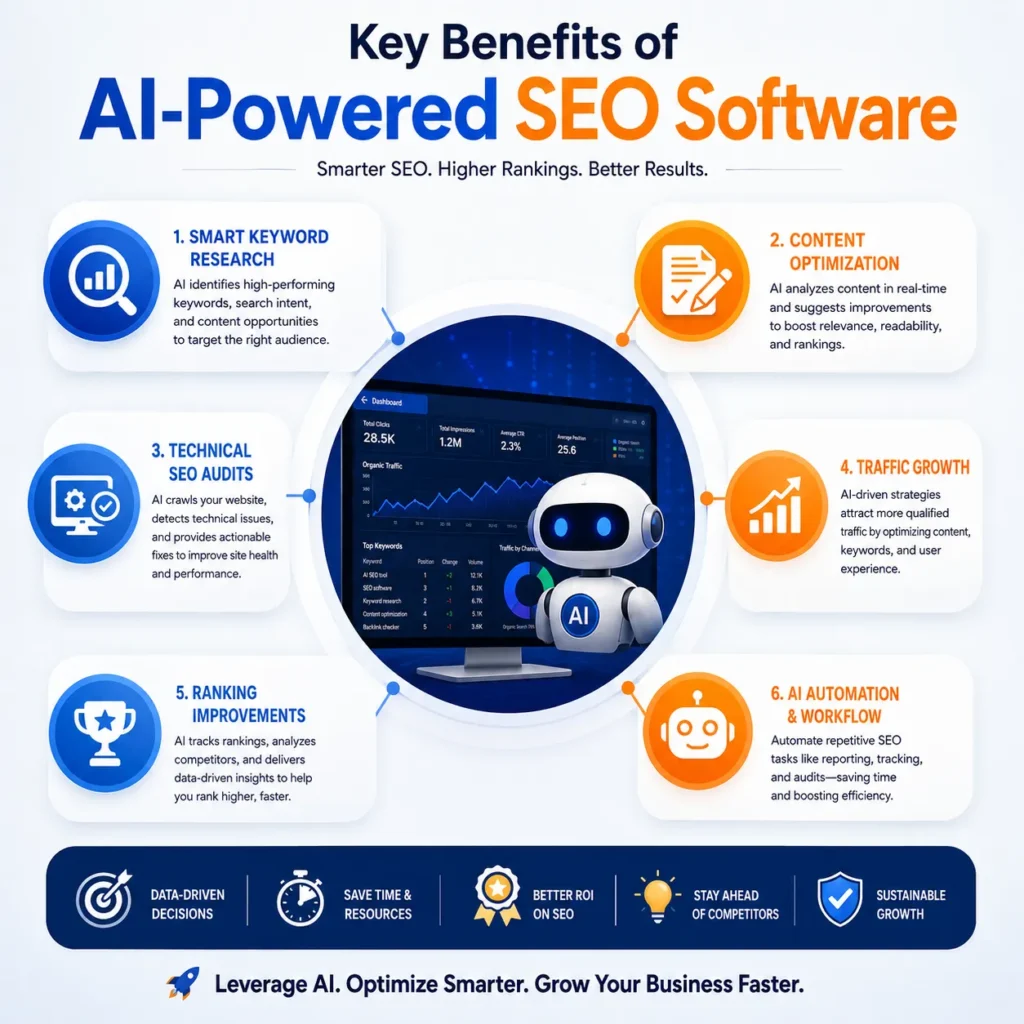
1. Faster Keyword Research
Keyword research used to mean manually exporting lists, cleaning spreadsheets, checking search volume, grouping terms, and mapping them to pages. AI-powered SEO software can speed this up by clustering related keywords and identifying intent.
For example, terms like “CRM for small business,” “best CRM software for startups,” and “affordable CRM tools” may belong to the same commercial investigation cluster. Meanwhile, “what is CRM” belongs to an informational cluster. This helps avoid creating multiple pages that compete with each other.
Good keyword grouping also supports better site architecture and content planning.
2. Better Understanding of Search Intent
Search intent is one of the most important SEO concepts. A person searching “how to fix a leaking tap” wants instructions. Someone searching “emergency plumber near me” wants a local service provider. Someone searching “best kitchen faucet brands” wants comparisons.
AI-powered SEO software can analyze search engine results pages and classify intent as informational, commercial, transactional, or navigational. This helps teams choose the right content format.
A common SEO mistake is trying to rank a sales page for an informational keyword or a blog post for a transactional keyword. Software can reduce that mismatch.
AI overview SEO tools
3. Stronger Content Optimization
Content optimization platforms can compare your page against top-ranking competitors and suggest improvements. These may include recommended terms, questions to answer, headings to include, ideal content depth, or missing topics.
This is useful, but it requires restraint. Not every suggested keyword belongs in your article. Overusing recommendations can make content sound stiff and unnatural.
The goal is not to satisfy a software score. The goal is to create the most useful page for the reader while making sure search engines can understand it.
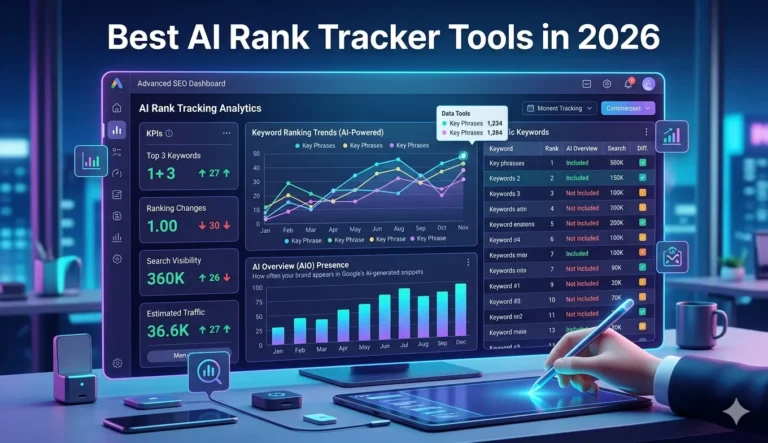
AI ranking tools for SEO
4. More Efficient Technical SEO Audits
Technical SEO can be tedious. Broken links, redirect chains, duplicate title tags, missing canonical tags, slow pages, crawl errors, and indexation problems can quietly damage performance.
AI-powered SEO software can help detect and prioritize issues. Instead of handing a developer a list of 3,000 warnings, a better platform will highlight which problems are most likely to affect organic traffic.
For example, a missing meta description on an old low-traffic tag page is not as urgent as a noindex tag accidentally placed on a key product category.
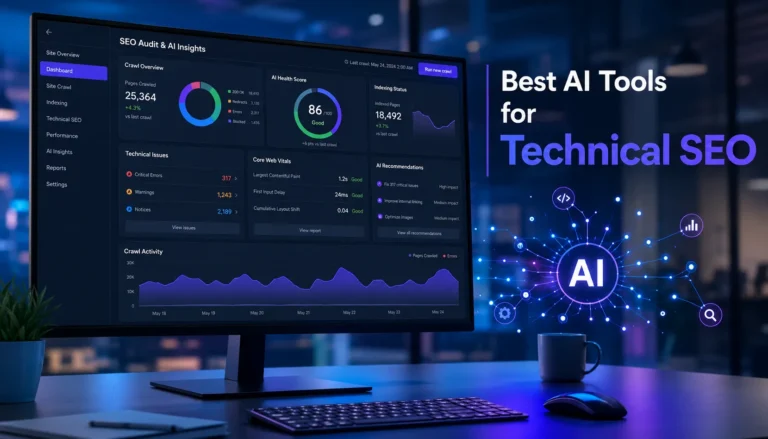
AI tools for technical SEO
5. Smarter Content Refresh Decisions
One of the most practical uses of AI-powered SEO software is content updating. Many websites already have valuable content that is simply outdated, thin, poorly structured, or missing newer information.
A good SEO platform can identify pages where rankings have slipped from positions 3–5 to positions 8–15. These pages are often easier to recover than brand-new pages are to rank.
A realistic example: a B2B software company has a blog post titled “Best Project Management Methods.” It ranked well in 2022 but has steadily declined. An AI-powered SEO audit might reveal that competitors now include remote team workflows, AI task automation, agile templates, and updated tool comparisons. Refreshing the article with current examples, better internal links, and improved structure could recover traffic.
AI tools for search visibility
Where AI-Powered SEO Software Falls Short
AI-powered SEO software is useful, but it has limits.
First, SEO data is not perfect. Search volume estimates can vary widely between platforms. Keyword difficulty scores are directional, not absolute. A tool may say a keyword is “easy,” but if the top results are government sites, major publishers, or dominant brands, ranking may still be difficult.
Second, AI recommendations can produce sameness. If every marketer uses the same optimization software and follows the same content outline, the web fills with nearly identical articles. That is not a winning long-term strategy.
Third, software cannot fully understand your brand, customers, legal responsibilities, or product truth. A healthcare site, financial service provider, or legal firm must be especially careful. Accuracy and compliance matter more than speed.
Fourth, AI-powered SEO software may miss qualitative signals: expert opinion, original research, customer pain points, unique images, product experience, and credibility. These are often what separate average pages from genuinely helpful ones.
How to Choose the Best AI-Powered SEO Software

The best AI-powered SEO software depends on your goals, team size, budget, and website complexity.
For small businesses, a simple platform with keyword research, site audits, and rank tracking may be enough. For content-heavy websites, content optimization and topic clustering matter more. For ecommerce brands, technical SEO, internal linking, product page optimization, and category structure may be priorities.
Look for software that offers:
- Reliable keyword and competitor data
- Clear content optimization guidance
- Search intent analysis
- Technical SEO auditing
- Integration with Google Search Console and Google Analytics
- Internal linking recommendations
- Useful reports, not just vanity metrics
- Transparent scoring and explainable recommendations
- Workflow features for writers, editors, and SEO managers
Avoid choosing a platform only because it has flashy AI features. The software should make decisions clearer, not more confusing.
Best Practices for Using AI-Powered SEO Software
The strongest SEO teams treat software as a decision-support system, not an autopilot.
Start with business goals. Are you trying to drive leads, ecommerce sales, newsletter signups, local bookings, or brand awareness? Rankings alone do not pay the bills.
Next, validate keyword opportunities manually. Look at the actual search results. Are the ranking pages blogs, product pages, videos, forums, local packs, or review sites? This tells you what Google believes users want.
Then use AI-powered SEO software to improve coverage and structure. Add missing sections when they genuinely help. Answer common questions. Strengthen internal links. Improve titles and descriptions. Update outdated examples.
Most importantly, add something original. That could be expert commentary, first-party data, product screenshots, customer examples, pricing insights, comparisons, or practical lessons. Originality is increasingly valuable in modern SEO.
Ethical and Quality Considerations
AI-powered SEO software can tempt teams to publish too much too fast. That is risky. Search engines are becoming better at identifying low-value pages created mainly to capture traffic.
Ethical SEO means helping users find accurate, useful information. It also means avoiding misleading claims, fake expertise, copied competitor structures, or inflated reviews.
For sensitive topics such as health, finance, law, and safety, expert review is essential. A content score does not guarantee factual accuracy.
Good SEO should serve both the business and the reader. If the reader loses, the strategy usually fails eventually.
The Future of AI-Powered SEO Software
AI-powered SEO software will continue moving toward predictive insights, automated workflows, deeper personalization, and stronger integration with search data. As search engines evolve with AI-generated answers, rich results, and conversational search experiences, SEO platforms will also adapt.
However, the core principles will remain familiar: understand the audience, answer better than competitors, build trust, maintain a healthy website, and keep improving.
The winners will not be the teams that automate everything. They will be the teams that use automation to make more room for strategy, creativity, research, and genuine expertise.
Final Thoughts
AI-powered SEO software is no longer a novelty. For many businesses, it has become a practical part of modern search marketing. It can save time, reveal opportunities, improve content, and simplify technical SEO.
But it works best in skilled hands. The software can show patterns, but people still need to make judgment calls. It can suggest topics, but people must provide insight. It can identify problems, but teams must decide what matters most.
In short, AI-powered SEO software is a powerful assistant to good SEO thinking, not a replacement for it.
FAQs About AI-Powered SEO Software
What is AI-powered SEO software?
AI-powered SEO software uses automation, machine learning, and data analysis to help with keyword research, content optimization, technical audits, and ranking improvements.
Is AI-powered SEO software good for small businesses?
Yes, especially for keyword research, competitor analysis, and finding quick website improvements. Small businesses should choose simple, affordable platforms.
Can AI-powered SEO software improve Google rankings?
It can help improve rankings by identifying opportunities and issues, but results depend on content quality, competition, technical health, and authority.
Does AI replace SEO experts?
No. AI can speed up SEO tasks, but strategy, judgment, brand knowledge, and expert review are still essential.
What features should I look for?
Look for keyword research, search intent analysis, content optimization, technical audits, rank tracking, and Google Search Console integration.
Is AI-generated SEO content safe?
It depends on quality and accuracy. Content should be reviewed, edited, fact-checked, and made genuinely useful before publishing.
How often should SEO software be used?
For active websites, weekly checks are useful. Larger sites may need daily monitoring for rankings, crawl issues, and content performance.
What is the biggest mistake when using AI SEO software?
The biggest mistake is following tool recommendations blindly instead of considering user intent, business goals, and content quality.