Best SEO Tools for Bloggers in 2026 Guide
The landscape of blogging has shifted dramatically over the last eighteen months. I remember a time when SEO meant spending four hours staring at a spreadsheet of keywords, manually checking the “difficulty” of each one, and then trying to weave them into a blog post without sounding like a robot. It was tedious, and frankly, it often pulled the soul out of the writing.
Today, the barrier to entry has changed. We are living in an era where machine learning and sophisticated algorithms can handle the “grunt work” of data analysis, allowing bloggers to get back to what they actually enjoy: storytelling. If you aren’t integrating intelligent SEO tools into your workflow, you’re essentially trying to win a Formula 1 race on a bicycle.
But with so many options hitting the market, how do you distinguish between a shiny toy and a tool that actually moves the needle on your organic traffic? Here is my take on the current state of SEO tools for bloggers, based on hours of trial, error, and a fair share of ranking wins and losses.
The Shift from Keyword Research to Topic Authority

In the old days, we targeted keywords. Today, we target intent. Modern SEO tools have evolved to help bloggers understand the clusters of information Google expects to see if you want to be considered an authority.
Take a tool like Surfer SEO or Frase. These aren’t just keyword checkers; they are content intelligence platforms. When I’m drafting a piece, these tools analyze the top 20 results currently ranking for my target search term. They look at the average word count, the number of images, and, most importantly, the semantic terms used.
For example, if you’re writing about “how to bake sourdough,” these tools will remind you that high-ranking articles also mention “bulk fermentation,” “scoring lingo,” and “hydration levels.” Using these tools isn’t about “cheating” the system; it’s about ensuring your content is comprehensive enough to actually satisfy the person searching.
AI Overview SEO Tools
The Power of Automation in On-Page Optimization
One of the biggest hurdles for bloggers is the technical side of metadata, schema markup, and internal linking. This is where tools like Rank Math (specifically their Content AI features) have become indispensable.
Internal linking is a great example of a high-impact, high-effort task. We all know that linking your new posts to old, relevant content helps Google crawl your site. But who has time to manually search through three years of archives every time they hit “publish”? Modern plugins now suggest internal links in real-time as you write, based on the context of your paragraphs. It’s a small technical nudge that can drastically lower your bounce rate and spread “link juice” across your site.
Read Also: AI Ranking Tools for SEO.
Navigating the Ethical Gray Area
We have to address the elephant in the room: the ethics of efficiency. There is a fine line between using a tool to optimize your research and letting a tool dictate your voice.
I’ve seen bloggers fall into the trap of “writing for the score.” They see a content optimization tool give them a grade of 70/100, and they start stuffing in suggested keywords until they hit 95/100. The result? A piece of content that ranks for a week but is so unreadable that no one ever returns to the site.
The most successful bloggers I know use these tools as a consultant, not a boss. Use the data to find gaps in your knowledge, but keep your unique perspective. Google’s recent “Helpful Content” updates have made it clear: they can tell when a human is providing genuine experience versus when a machine is just re-hashing existing data.
Predictive Analytics: Knowing What to Write Before You Write It
One of my favorite developments in the SEO space is predictive trend analysis. Tools like Exploding Topics or the advanced features in Semrush use data patterns to suggest topics before they peak.
Imagine you’re a travel blogger. Instead of writing about “Visiting Kyoto” (which is hyper-competitive), a predictive tool might show you a 300% increase in searches for “Hidden tea houses in Uji.” Getting in early on these rising trends allows a smaller blog to outrank the giants like TripAdvisor or Lonely Planet because you’ve provided the most relevant, fresh content before they even notice the trend.
You may also like: AI Tools for Search Visibility
The Hidden SEO Benefit: Image and Accessibility
We often forget that SEO includes image search. I’ve recently started using tools that automatically generate descriptive Alt-text based on image recognition. For a food blogger with 500 recipes, manually writing accessibility tags for every photo of a chocolate chip cookie is a nightmare. Automating this doesn’t just help with SEO; it makes your site more accessible to the visually impaired, which is a major (and often overlooked) ranking factor.
The Practical Workflow for a Modern Blogger
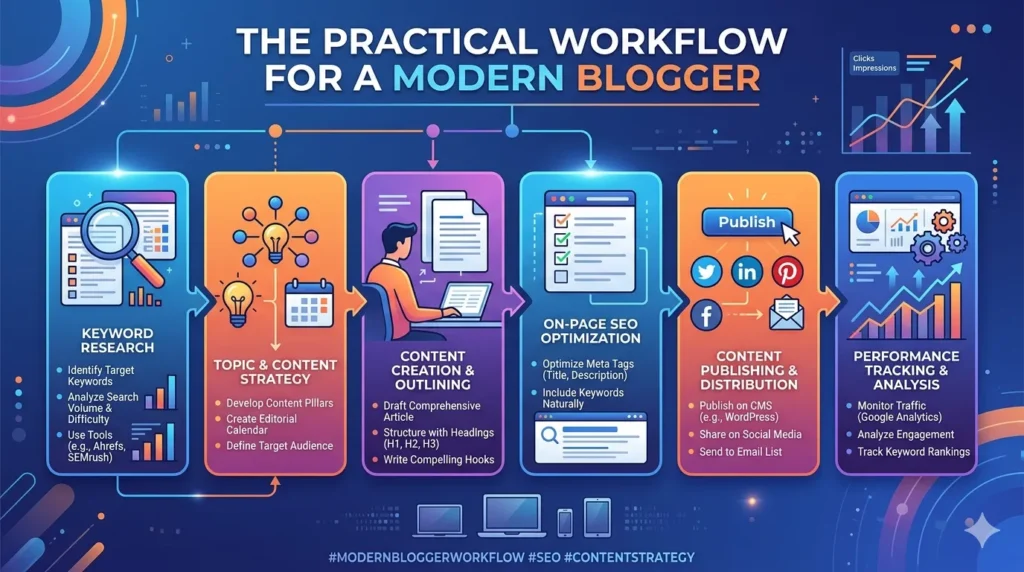
If you’re feeling overwhelmed, here is a simple, effective workflow I’ve found that balances human creativity with algorithmic precision:
- Ideation: Use a tool like AnswerThePublic or Keyword Chef to find “low competition” questions people are asking.
- Structuring: Use a content optimizer (like NeuronWriter) to see what headers and subtopics the top-ranking sites are covering.
- The Human Element: Write your draft. Tell your stories. Add your personal photos and your “hot takes.”
- Optimization: Run your draft through the tool to see if you missed any crucial semantic keywords.
- Audit: Use a tool like Screaming Frog or Sitebulb once a month to ensure your technical SEO (speed, broken links) is holding up.
The Human Verdict
SEO tools are better than they’ve ever been, but they lack one thing: empathy. A tool can tell you that “10 tips for weight loss” has a high search volume, but it can’t tell you the emotional struggle of someone looking for that information.
The “sweet spot” in blogging today is using high-tech tools to handle the math while you handle the emotion. Use the data to get the click, but use your voice to keep the reader.
In a world where content is becoming a commodity, your personal experience, your “EEAT” (Experience, Expertise, Authoritativeness, and Trustworthiness), is your only true competitive advantage. These tools are just magnifying glasses that help people find that advantage.
FAQs
Q: Are free SEO tools enough for a new blogger?
A: Absolutely. You can get very far with Google Search Console and the free versions of tools like Rank Math or Ubersuggest. Don’t feel pressured to pay for a $100/month subscription until your blog is actually making money.
Q: Will using these tools make my writing feel “robotic”?
A: Only if you let them. Treat the suggestions as a checklist of topics to cover, not a script you must follow word-for-word. If a suggested keyword feels clunky in a sentence, don’t use it.
Q: What is the most important SEO metric for bloggers to watch?
A: While everyone looks at “Keyword Difficulty,” I prefer “Search Intent.” If the top 10 results for a keyword are all big e-commerce stores and you are a blogger, you will likely never rank for that term, no matter how good your content is.
Q: Do these tools help with Google’s “Helpful Content” updates?
A: They help you identify what users are looking for, which is half the battle. However, the “helpful” part comes from your unique insights, original photos, and firsthand experience, which no tool can provide for you.